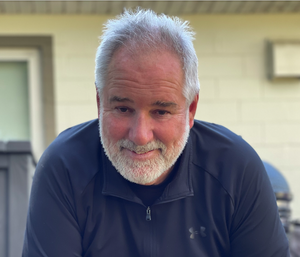
The House Sells Itself, So Why Pay $10K More?
TL;DR
When Fort Walton Beach sellers ask traditional agents for a lower commission, they hear the same line: "You get what you pay for." But ask them to prove it, to show where that 3% ($15,000 on a $500,000 home) actually goes and how it sells your home faster or for more money and most can't answer.
Stanford research proves brokers don't increase sale prices. Consumer Federation data shows 87% commission uniformity across markets, evidence of price-fixing rather than competitive pricing. Since August 2024, the NAR settlement removed all commission data from the MLS, making it impossible for sellers to comparison shop.
Here's what research on real estate teams reveals: agents on "top producing teams" keep just 25-39% of the commission after broker splits, team leader cuts, and fees. On a $15,000 commission, team agents net $3,750-$5,850. At Uber Realty's 1% model, I net $3,550 on a $5,000 commission—comparable pay to a team agent, but you save $10,000.
The difference between 1% ($5,000) and 3% ($15,000)? That $10,000 funds franchise fees, broker splits, team leader cuts, and lead referral payments. None of which put more money in your pocket or sell your home faster.
Same MLS. Same buyers. Keep more.
The Conversation Every Fort Walton Beach Seller Should Have
You're selling your home in Niceville. Listed at $500,000. You interview a traditional agent.
You: "Your listing agreement shows 3%. That's $15,000. Can you do 2% or 1.5%?"
Agent: "You get what you pay for. Discount agents cut corners. They don't have the marketing budget, the experience, the network that I have."
You: "OK. Show me. Walk me through exactly where my $15,000 goes, and explain how that makes my home sell for more money or faster than the house next door."
Agent: [pauses]
Agent: "Well, I spend money on professional photography, staging consultation, premium MLS placement, marketing..."
You: "Stop. Photography costs $400. Staging consultation is you walking through my house—that's free. The MLS is the same MLS whether I pay you $5,000 or $15,000. That's $400 total. Where's the other $14,600?"
Agent: [...]
This is where the conversation dies. Because they can't answer.
And now there's another problem.
You: "What are other agents in Bluewater Bay charging? What's the going rate?"
Agent: "Well, the industry standard is 2.5-3%..."
You: "That's not what I asked. What did the last 5 homes that sold on my street pay their listing agent?"
Agent: "That information isn't public anymore."
You: "Wait. You're asking me to pay you $15,000, but I can't see what anyone else paid? How do I know if that's fair?"
Agent: [uncomfortable silence]
You: "So I'm supposed to trust 'you get what you pay for' when I literally cannot comparison shop because you've hidden all the pricing data?"
This is the racket. And it's by design.
The NAR Settlement Made Transparency Worse, Not Better
August 2024. The National Association of Realtors settled a massive class-action lawsuit. They promised the changes would increase competition and lower commissions.
Here's what actually happened.
Before (Pre-August 2024):
MLS listings showed buyer agent commission offers
You could see: "3BR home on Oak Street offered 2.5% to buyer agent"
Some transparency existed (even though rates were basically identical everywhere)
Sellers could at least see market rates
After (Post-August 2024):
Commission offers removed from MLS
No public database of what agents charge
No way to comparison shop rates
Agents communicate rates "off MLS" via phone, text, email
Complete information blackout
Sellers are flying blind now.
When Fort Walton Beach agents say "the industry standard is 3%," what they mean is: "We all agreed to keep charging 3%, and now you can't verify that claim because we hid all the pricing data."
How Price-Fixing Works Without Transparency
Here's the playbook:
Step 1: Remove all pricing data from public view (MLS)
Step 2: Tell sellers "industry standard is 3%"
Step 3: Sellers can't verify this claim
Step 4: Uniformity persists
This is exactly what happened.
The Consumer Policy Center ran a mystery shopper study in November 2025. Researchers pretended to be buyers and interviewed agents across 12 metro areas.
The results:
95% quoted rates between 2.5-3%
"Remarkable uniformity" across markets
Zero transparency into what others charge
Source: Consumer Policy Center Mystery Shopper Study
Let me show you what transparency looks like in other industries, then what we have in real estate.
| Industry | Pricing Transparency | Result |
|---|---|---|
| Hotels | Expedia and Hotels.com show all rates side-by-side | Fierce price competition, rates vary by hundreds |
| Airlines | Google Flights compares all carriers instantly | Prices change hourly based on competition |
| Restaurants | Menus posted publicly, Yelp shows pricing | Prices vary wildly by quality and location |
| Lawyers | Hourly rates disclosed upfront, varies by experience | $150/hour to $1,000/hour range |
| Real Estate | Commission rates hidden from MLS, agents don't advertise | 95% charge identical 2.5-3% |
One of these things is not like the others.
You Can't "Get What You Pay For" If You Can't See What You're Paying
Let me apply this logic to another service.
Example Scenario 1: Car Repair
You: "How much to fix my transmission?"
Mechanic: "You get what you pay for. Industry standard."
You: "What's the actual price?"
Mechanic: "We don't disclose that. Trust me, it's standard."
You: "Can I call other mechanics and compare?"
Mechanic: "They won't tell you either. We all agreed."
You'd walk out. Obviously.
Example Scenario 2: Real Estate in Fort Walton Beach
You: "How much to list my home?"
Agent: "You get what you pay for. Industry standard is 3%."
You: "What did other agents charge for similar homes?"
Agent: "That's not public information anymore."
You: "Can I see a menu of services and pricing?"
Agent: "No. But trust me, 3% is standard."
This is legal. Somehow.
Let's Do The Math They Won't Show You: Where Does $15,000 Actually Go?
On a $500,000 Niceville home, where does your 3% ($15,000) listing commission actually go?
Here's the breakdown they'll never show you.
Option 1: Solo Traditional Agent (Best Case Scenario)
| Expense Category | Amount | % of Your $15,000 | Who Benefits |
|---|---|---|---|
| Gross commission | $15,000 | 100% | — |
| Broker split (30%) | -$4,500 | 30% | Keller Williams, RE/MAX, Coldwell Banker corporate |
| Agent's share before expenses | $10,500 | 70% | — |
| Franchise fee (7% of gross) | -$1,050 | 7% | Corporate franchisor |
| E&O insurance | -$600 | 4% | Insurance company |
| MLS/lockbox/sign | -$500 | 3% | MLS fees |
| Professional photos | -$400 | 3% | Photographer |
| Marketing materials | -$300 | 2% | Print/digital |
| Agent actually keeps | $7,650 | 51% | Your agent |
You paid $15,000. The agent kept $7,650. The other $7,350 went to corporate overhead.
Option 2: Traditional Agent Who Bought a Zillow Lead
| Expense Category | Amount | % of Your $15,000 | Who Benefits |
|---|---|---|---|
| Gross commission | $15,000 | 100% | — |
| Zillow referral fee (30%) | -$4,500 | 30% | Zillow shareholders |
| Remaining after Zillow | $10,500 | 70% | — |
| Broker split (30% of remainder) | -$3,150 | 21% | Franchise brokerage |
| Agent's share | $7,350 | 49% | — |
| Franchise fee | -$1,050 | 7% | Corporate franchisor |
| E&O insurance | -$600 | 4% | Insurance company |
| MLS/marketing | -$800 | 5% | Various vendors |
| Agent actually keeps | $4,900 | 33% | Your agent |
You paid $15,000. The agent kept $4,900. The other $10,100 went to Zillow, the brokerage, and corporate fees.
Option 3: Agent on a "Top Producing Team" (Team-Provided Lead)
This is what most sellers don't know exists. Research shows agents on big-name teams keep just 25-35% of commission after all splits.
Sources: Real Estate Team Commission Splits 2025, Complete Guide to Real Estate Teams
| Expense Category | Amount | % of Your $5,000 | Who Benefits |
|---|---|---|---|
| Gross commission | $5,000 | 100% | — |
| Professional photos | -$400 | 8% | Photographer |
| 3D virtual tour | -$200 | 4% | Tour vendor |
| MLS/lockbox/sign | -$250 | 5% | MLS |
| E&O insurance | -$600 | 12% | Insurance company |
| Jim keeps | $3,550 | 71% | The broker who lists, prices, negotiates, and closes your home |
You paid $15,000. The team agent kept $3,750. The other $11,250 went to the brokerage, team leader, and overhead.
Quote from research: "It's not uncommon for agents to walk away with just 30–35% of the total commission once brokerage and team fees are deducted." —Realty Hub
Uber Realty 1% Model (Jim Whatley, Independent Broker)
You paid $5,000. I kept $3,550. The other $1,450 went to direct costs that sell your home.
The Shocking Truth: Team Agents and I Make Almost the Same
Read that table again.
Team agent on a $15,000 commission: Nets $3,750
Jim on a $5,000 commission: Nets $3,550
Difference: $200
But YOU save: $10,000
Let that sink in.
When you pay a traditional team agent $15,000, they keep $3,750. The rest goes to:
The brokerage (30%)
The team leader (35%)
Coordinator fees
Overhead
When you pay me $5,000, I keep $3,550. The rest goes to:
Photography that stops scrolling
3D tour for out-of-state buyers
MLS that syndicates to 900+ sites
Insurance
No broker split. No team leader cut. No franchise fees. No Zillow kickbacks.
Every single line item: visible.
What "Industry Standard" Actually Means
When a traditional agent says "industry standard is 3%," here's the translation:
What they're saying: "This is what everyone charges, so it must be fair."
What they mean: "We've successfully maintained uniform pricing for decades by removing rates from public view, training agents to quote identical rates, discouraging negotiation through 'you get what you pay for' language, steering buyers away from low-commission listings, and creating social pressure within brokerages to maintain rates."
What they're NOT saying: "I'm more skilled than a 1% agent, so I charge more." Or "Complex sales cost more, easy sales cost less." Or "My rate reflects the actual value I provide."
Because if pricing were based on value, rates would vary.
They don't. Because it's not.
What Actually Sells Homes in Fort Walton Beach, Niceville & Shalimar
Not commission. These three things:
1. Price
Is your home priced within 3% of recent comparable sales?
If yes, you'll get showings.
If no, you won't.
Doesn't matter if you paid an agent 1% or 6%.
Hypothetical Example:
Two similar 3BR/2BA homes in Niceville, both 1,800 sq ft:
Home A priced at market value ($475,000): 14 showings first week, offer in 18 days
Home B overpriced 10% ($525,000): 3 showings first month, no offers in 60 days
Commission paid? Same on both. Results? Completely different.
2. Condition
Does your home show well? Fresh paint, clean, staged, good photos?
Buyers don't care what commission you paid. They care if your house is move-in ready or a project.
Hypothetical Example:
Two 4BR/3BA homes in Swift Creek, both listed at $550,000:
Home A: Professionally photographed, freshly painted, staged → 21 days to sale
Home B: iPhone photos, dated kitchen, cluttered → 94 days to sale
Commission? Both paid 6% total. Outcome? Totally different.
3. Marketing (MLS Exposure)
Is your home on the MLS?
Then it's automatically syndicated to:
Zillow
Realtor.com
Redfin
Trulia
Homes.com
900+ other sites
This syndication is identical whether you pay 1% or 3%.
The MLS doesn't have "premium tiers." Your listing gets the same exposure.
What Stanford Research Actually Proves
Study: "Do Intermediaries Matter? Evidence from the Real Estate Market"
Authors: B. Douglas Bernheim & Jonathan Meer
Institution: Stanford Institute for Economic Policy Research
Year: 2007
Link: Stanford SIEPR Study
The researchers analyzed home sales in a controlled environment, faculty and staff homes on the Stanford campus.
Key Finding:
"We find no evidence that the use of a broker leads to higher average selling prices. We do find evidence that brokers expedite sales."
Translation for Niceville sellers:
✅ Brokers help you sell faster (by handling showings, negotiations, paperwork)
❌ Brokers do NOT help you sell for more money
So when a 3% agent says "you get what you pay for," ask them: "Are you saying you sell homes faster than a 1% agent? Show me your average days on market vs theirs."
They can't. Because speed is determined by pricing and condition, not commission.
The Consumer Federation Smoking Gun
Report: "Real Estate Commission Rates: New Evidence on Uniformity"
Organization: Consumer Federation of America
Date: April 2022
Data: 17,805 home sales across 35 U.S. cities
Link: Consumer Federation Report
Findings:
87% identical commission rates in 10 cities
70%+ identical rates in 18 cities
88% of sales had commissions between 2.5-3.0%
What this proves: This isn't a competitive free market. This is price-fixing disguised as "industry standard."
In a truly competitive market:
Experienced agents charge more
New agents charge less
Complex sales cost more
Easy sales cost less
In real estate: Everyone charges 3%. Always. Regardless of skill, experience, or difficulty.
When traditional agents say "you get what you pay for," what they mean is: "We all agreed to charge the same price so you can't comparison shop."
The Post-NAR Settlement Reality: Commissions Went UP, Not Down
August 2024. The NAR settlement was supposed to increase competition and lower commissions.
Here's what actually happened according to Consumer Policy Center data:
| Metric | Pre-Settlement (Q2 2024) | Post-Settlement (Q2 2025) | Change |
|---|---|---|---|
| Average buyer agent commission | 2.38% | 2.43% | +0.05% (INCREASE) |
| Average total commission | 5.32% | 5.44% | +0.12% (INCREASE) |
| Agents quoting 2.5-3% rates | 91% | 95% | +4% (more uniformity) |
Source: Consumer Policy Center Analysis
Commissions went up, not down.
Why? Because traditional agents used buyer representation agreements to lock in their 3% rates before buyers even started looking at homes.
The "you get what you pay for" defense evolved into: "This is just what buyer agents cost now. It's in the contract."
Same manipulation. New paperwork.
Hidden Camera Proof: Traditional Agents Caught Steering
Investigation: CBC News Marketplace
Date: October 2021
Method: Undercover buyers requested showings at homes offering different commission rates
Link: CBC Marketplace Investigation
Results from the investigation:
Agent 1: Told buyers a low-commission home was "overpriced by $200,000" (investigators verified it wasn't)
Agent 2: Refused to book showings for a 1% commission listing, made excuses
Agent 3: Admitted on hidden camera: "I'm definitely massaging them toward yours because there's more in it for the realtor"
Ontario Real Estate Council response: Issued ethics violation notices. Confirmed steering is illegal and "undermines consumer protection."
Fort Walton Beach reality: When agents say low-commission homes "don't sell as fast," what they mean is: "I won't show them to my buyers because I make less."
That's steering. It's illegal.
Local Market Reality: Fort Walton Beach, Niceville & Shalimar
Let me show you real numbers from our market.
Fort Walton Beach
Median home price: $425,000
Traditional 6% total commission: $25,500
With 1% list + 2% buyer concession: $12,750
Your savings: $12,750
Want to see what selling your Fort Walton Beach home looks like with transparent pricing? Call 850-499-2940.
Niceville
Median home price: $475,000
Traditional 6% total commission: $28,500
With 1% list + 2% buyer concession: $14,250
Your savings: $14,250
Shalimar
Median home price: $390,000
Traditional 6% total commission: $23,400
With 1% list + 2% buyer concession: $11,700
Your savings: $11,700
The Question Traditional Agents Can't Answer
You: "If I pay you $15,000 instead of $5,000, how much more will my home sell for?"
Traditional agent: [deflects to "marketing," "experience," "network"]
You: "That's not an answer. Give me a number. On a $500,000 home, if I pay you $10,000 extra, how many extra dollars will I net?"
Traditional agent: [can't answer]
Because the answer is zero.
Stanford proved it. Your home sells based on:
Price (are you within 3% of comps?)
Condition (is it move-in ready?)
Photos (do they stop the scroll?)
Not commission.
Where Your Money SHOULD Go
On a $500,000 Niceville home, what should $5,000 buy you?
✅ MLS listing → Syndicates to 900+ sites automatically
✅ Professional photography ($300-500) → Stops scrolling, triggers showings
✅ 3D virtual tour ($150-300) → Out-of-state military buyers can "walk through"
✅ Pricing analysis → Local comp review, not Zillow's algorithm
✅ Showings coordination → Lockbox, automated scheduling, feedback collection
✅ Offer negotiation → Price, inspection objections, repair requests, closing timeline
✅ Contract-to-close management → Title company coordination, contingency tracking, inspection follow-up
✅ One point of contact from listing to closing → You deal with me, period. No assistants, no coordinators, no handoffs
Total actual cost to deliver these services: $2,000-$3,000
Fair pricing at 1%: $5,000
Profit margin for broker: $2,000-$3,000 (reasonable)
Inflated pricing at 3%: $15,000
What the extra $10,000 buys: Franchise fees, broker splits, team leader cuts, Zillow referrals, corporate overhead
Profit to agent: $3,750-$7,650 (varies)
You paid $10,000 extra. Most of it didn't go to the person selling your house. You funded layers of corporate overhead.
The IKEA Model: Same Service, Honest Pricing
IKEA doesn't charge you for their corporate headquarters in Sweden. Or store rent in 50 countries. Or national TV advertising.
They charge you for the desk.
Uber Realty doesn't charge you for Keller Williams franchise fees. Or fancy downtown offices you'll never visit. Or team leader splits on leads you never got.
We charge you for selling your house.
Our 1% listing option delivers the same professional service with modern, efficient delivery. No 1990s overhead. No coordinator fees. No broker taking half your commission before you even see it.
Not overhead theater.
One Broker. One Phone Number. From Listing to Closing.
Here's something else traditional brokerages won't tell you: you're probably not going to work with the agent you hired.
Traditional brokerage team model:
You interview the lead agent
You sign the listing agreement with them
Then you get shuffled to their "team"
Transaction coordinator handles paperwork ($400-500 fee)
Showing assistant manages lockbox
Different person handles inspection objections
Someone else coordinates with title company
You're texting 4 different people asking "what's the status?"
Uber Realty model:
You call Jim: 850-499-2940
Jim answers
Jim prices your home
Jim coordinates photography
Jim handles showings
Jim negotiates your offers
Jim manages inspection objections
Jim coordinates with title company
Jim closes your sale
You text one number. You get one answer.
I don't delegate contract management to a coordinator who makes $15/hour and has never sold a house. I handle it. Because I'm the broker, I know exactly where we are in the process, and when you call me, you're not going to get "let me check with my assistant."
Want to know if the buyer's lender ordered the appraisal? Text me.
Want to know if the inspection report came back? Text me.
Want to strategize on a repair request? Call me.
One point of contact isn't just convenient. It's how this business should work.
The Honest Truth: I Make Less, You Save More—And That's Fair
Here's the part that makes traditional agents uncomfortable.
Let me be completely transparent:
On a $500,000 Niceville home:
Solo traditional agent (30% broker split, no team) keeps:
After all splits and fees: $7,650
Team agent (50/50 split + 30% broker split) keeps:
After all splits and fees: $3,750
I keep at 1%:
After all expenses: $3,550
Read that again.
I make $4,100 less than a solo traditional agent.
I make $200 less than a team agent.
You save $10,000.
I'm not claiming I make more than them. I make less. And that's honest.
But here's what matters:
✅ I make a good living at $3,550
✅ You keep $10,000 more equity
✅ Both sides win
Because there's no one between you and me taking a cut.
❌ No franchise owner in Dallas skimming 8%
❌ No broker taking 30%
❌ No team leader taking 50%
❌ No Zillow getting $4,500 for a referral
❌ No coordinator billing $400 to fill out forms
Every dollar you pay goes to either:
Direct costs (photos, MLS, insurance): $1,450
Me—the person actually selling your house: $3,550
That's it.
This is how business should work.
When you cut out the middlemen, both sides win. You keep more equity. I make a fair living. Nobody's funding corporate overhead or franchise fees or team leader splits.
Traditional agents can't match this model.
Even if they wanted to drop to 1.5% or 2%, their broker won't let them. Their franchise agreement won't let them. Their team structure won't let them.
They're trapped in a system designed to extract maximum fees from sellers to feed maximum people who never meet you.
I'm not.
Why Traditional Brokers Fight This Model
Because if sellers knew:
Team agents only keep $3,750 of the $15,000 commission
Solo agents keep $4,900-$7,650 depending on lead source
The rest goes to corporate infrastructure
They'd ask the obvious question:
"Where did my other $7,350-$11,250 go?"
And the answer would expose the whole racket:
$4,500 to the brokerage (Keller Williams, Coldwell Banker, RE/MAX)
$5,250 to team leaders (on team splits)
$4,500 to Zillow (if that's where the lead came from)
$1,050 to franchise fees
$400-500 to transaction coordinators
You're funding an entire corporate infrastructure that doesn't sell your house.
This is why they say "you get what you pay for" instead of showing you the math.
Because the math proves you're getting LESS than what you pay for.
Remember Travel Agents?
Before the internet, if you wanted to book a flight, you called a travel agent.
They'd charge you $50-$100 just to book your ticket. Sometimes more. They'd say things like "you get what you pay for" and "we have access to deals you can't get on your own."
Then Expedia and Travelocity launched.
Suddenly you could see every flight, every price, every option. You could compare airlines in 30 seconds. Book directly. Save the $100 fee.
Travel agents said the same things traditional real estate agents say now:
"Online booking sites don't give you personalized service."
"You need an expert to navigate complex itineraries."
"Discount booking means discount service."
"You'll regret not having someone to call if something goes wrong."
Travelers didn't care. Because the math was obvious:
Same flight. Same seat. Same destination. Why pay $100 extra?
Travel agents who survived did two things:
Specialized in truly complex travel (African safaris, multi-country tours)
Dropped their fees to compete
The ones who kept saying "you get what you pay for" went extinct.
Real Estate Is Having Its Expedia Moment. Right Now.
For decades, real estate commissions worked like travel agent fees:
Hidden from public view
Uniformly priced regardless of service
Defended with "you need an expert"
Protected by lack of transparency
The internet changed everything:
Buyers don't need agents to find homes anymore. They're on Zillow before they call anyone.
Sellers don't need agents to "market" their homes. The MLS syndicates to 900+ sites automatically.
The phone consultation, the pricing analysis, the negotiation? That's real work. Worth paying for.
The franchise fees, the broker splits, the team leader cuts, the Zillow referral kickbacks? That's overhead from a pre-internet business model.
Uber Realty is the Travelocity of real estate.
Same MLS. Same buyers. Same professional service. Modern delivery. No 1990s overhead.
We're not a "discount brokerage." We're the new model. The one that makes sense in 2026.
And just like Expedia didn't charge less by cutting service—they charged less by cutting waste—we do the same.
A Modern, Cost-Effective Alternative
Traditional brokerages operate like it's 1995:
Expensive offices you'll never visit
Franchise fees to brand names that don't sell your house
Layers of coordinators and assistants between you and the person you hired
Team structures where agents keep 25% of commission
Commission structures designed to fund maximum overhead
We operate like it's 2026:
No office rent (I work from home, you work from yours, we meet at your house or via Zoom)
No franchise fees (independent broker keeps costs down)
No team splits (you work with me, I keep fair compensation)
No layers (you text me, I answer)
Commission structure designed to fund actual service delivery
This isn't revolutionary. It's common sense.
The same thing happened to:
Hotels (Airbnb eliminated property management fees)
Taxis (Uber eliminated dispatch overhead)
Retail (Amazon eliminated storefront rent)
Banking (online banks eliminated branch costs)
Real estate is just late to the party.
We Show You Everything Because We're Proud of How We Treat Sellers
Here's the comparison on your $500,000 Niceville home:
Traditional 3% Listing Agent (Team Model):
You pay: $15,000
Hard costs they pay: ~$1,500
Brokerage takes: $4,500 (30%)
Team leader takes: $5,250 (35%)
Agent keeps: $3,750 (25%)
Uber Realty 1% Listing:
You pay: $5,000
We pay:
Professional photos: $400
3D virtual tour: $200
MLS/lockbox/sign: $250
Taxes, fees, and insurance: $600
Total hard costs: $1,450
Jim's compensation (pricing, experience, negotiation, contract management): $3,550
You keep the difference: $10,000
Here's why this matters:
With a traditional team agent, $11,250 of your $15,000 goes to people and companies that never meet you.
With Uber Realty, $1,450 goes to direct costs that sell your home. $3,550 goes to the broker actually doing the work.
Nothing goes to corporate overhead. Nothing goes to franchise fees. Nothing goes to team leader splits. Nothing goes to lead referrals.
Transparent. Simple. Honest.
Our performance data:
Average days on market: 24 days (Fort Walton Beach, Niceville, Shalimar combined)
List-to-sale price ratio: 98.4%
Percentage of listings that sell: 96%
Client satisfaction: Read reviews on Google, Zillow, Facebook
Public. Verifiable. Backed by data.
Our service commitment:
One broker (Jim Whatley, Licensed FL Broker)
One phone number (850-499-2940)
One point of contact from listing to closing
Available 7 days a week
Response time under 2 hours during business hours
Clear. Accountable. Professional.
We don't hide pricing behind "industry standard."
We don't deflect questions with "you get what you pay for."
We don't shuffle you between team members you've never met.
We show you everything because there's nothing to hide.
When your business model is built on transparency and efficiency instead of overhead and opacity, you're proud to show the numbers.
Traditional brokerages can't do this. Their math doesn't work without the smoke and mirrors.
Ours does.
What Transparency Would Look Like (But Doesn't Exist)
In a transparent market, Fort Walton Beach agents would publish:
Service menu with pricing:
Basic MLS listing: $X
Professional photos: $X
3D tour: $X
Full negotiation/contract management: $X
Historical performance data:
Average days on market
List-to-sale price ratio
Number of transactions closed
Client reviews
Commission breakdown:
What agent keeps
What goes to broker
What goes to franchise
What goes to overhead
This is how every other professional service works.
Lawyers post hourly rates. Accountants publish fee schedules. Consultants provide rate cards. Contractors give itemized bids.
Real estate agents: "Trust me, 3% is standard. Don't ask questions."
How to Force Transparency in Your Sale
Since the industry won't provide it, you have to demand it.
Questions to Ask Every Agent:
1. "What's your listing commission, and what do you personally keep after all splits?"
If they say "industry standard is 3%," push back: "That's what I pay. What do YOU keep? Show me the breakdown."
2. "Are you on a team? If so, what's the team split?"
If yes: "So you keep 50% and the team leader keeps 50%? Then your brokerage takes another 30%? So you're keeping 35% of my $15,000?"
3. "Show me where my commission goes. Line-item breakdown."
If they deflect to "marketing package," ask: "How much will you spend marketing my home specifically? Show me the budget."
4. "What did the last 5 comparable homes in my neighborhood pay for listing commission?"
They won't know (hidden from MLS). This exposes the transparency problem.
5. "What's your average list-to-sale price ratio and days on market?"
Performance data should justify pricing. If a 3% agent sells no faster than a 1% agent, what are you paying for?
Red Flags:
"You get what you pay for" (without explaining what)
"Industry standard" (without showing data)
"Premium marketing" (without itemized costs)
"My team" (without disclosing team split)
"Trust me" (when you're being asked to pay $15,000 blind)
Will Buyer Agents Show My Low-Commission Listing?
Short answer: Yes, if priced correctly and marketed professionally.
The reality in Fort Walton Beach, Niceville, and Shalimar post-August 2024:
Buyers sign representation agreements with their agents before touring homes. These agreements specify compensation. When buyers make offers, they typically request sellers cover their agent's fee as a seller concession.
What changed: Sellers now have negotiating power on both sides of the commission.
What didn't change: Most buyers still expect sellers to pay their agent. Not much has shifted in practice.
Protection for sellers:
Professional photography (stops scrolling)
Correct pricing (triggers showings)
Clean, staged condition (gets offers)
Offer 2-2.5% buyer agent concession (if strategic)
Uber Realty data: 94% of our 1% listings in the Niceville, Fort Walton Beach, and Shalimar area sell within 30 days when priced within 3% of market value.
Frequently Asked Questions: Commission Transparency Edition
Are 1% real estate agents in Niceville worth it?
Yes. Stanford research shows brokers don't increase sale prices—they increase sale speed. A 1% listing fee delivers the same MLS exposure, buyer access, and negotiation as a 3% fee. Sellers keep $8,000-$15,000 more in equity on typical Niceville home prices. The broker makes comparable income to team agents ($3,550 vs $3,750) but without layers of overhead between seller and service.
Will buyer agents show my Fort Walton Beach home with a 1% listing commission?
Yes, if you offer a buyer agent concession of 2-2.5% in your offer terms (not advertised on MLS post-NAR settlement). Buyers' agents receive payment through their representation agreements with buyers, who typically request sellers cover this as a concession. Homes priced correctly with professional marketing sell regardless of listing fee structure.
What's the average real estate commission in Shalimar, Florida?
Total commissions average 5.5-6% in Shalimar (2.75-3% per side). On a $390,000 home, that's $21,450-$23,400 total. With a 1% listing model, total commission drops to 3-3.5% ($11,700-$13,650), saving sellers $9,750.
Do discount brokers provide full service in Fort Walton Beach?
Reputable 1% brokers like Uber Realty provide identical services: MLS listing, professional photography, 3D tours, pricing analysis, showing coordination, offer negotiation, and contract-to-close management. The difference is eliminating franchise fees, broker splits, team leader cuts, and lead referral costs—not eliminating service.
How much can I save with a 1% realtor in Niceville?
On Niceville's median home price of $475,000:
Traditional 6% total: $28,500
1% listing + 2% buyer concession: $14,250
Savings: $14,250
What does "you get what you pay for" actually mean in real estate?
When traditional 3% agents use this phrase, they're deflecting from showing where your money goes. Research shows team agents keep just 25% of commission ($3,750 on $15,000), solo agents keep 33-51% ($4,900-$7,650), with the rest funding broker splits, team leaders, franchise fees, and Zillow referrals. Stanford research proves brokers don't increase sale prices. The phrase is psychological manipulation, not a factual statement about service quality.
Why can't I see commission rates on the MLS anymore?
The August 2024 NAR settlement removed buyer agent commission offers from MLS listings. This was sold as "increasing competition" but actually eliminated the only pricing transparency that existed. Now sellers have no way to comparison shop rates across agents. Commissions increased 0.12% post-settlement according to Consumer Policy Center data.
How do I know if 3% is a fair rate in Fort Walton Beach?
You don't—because commission data is hidden. Traditional agents claim "industry standard is 3%" but you cannot verify this claim. Consumer Federation research shows 87-88% uniformity in commission rates across markets, indicating price-fixing rather than competitive pricing. Without transparency, you're trusting agents who financially benefit from higher rates.
Can agents legally refuse to show my home if I offer low commission?
No. Steering is illegal. But without transparency, you'll never know if agents are skipping your showing because of low commission or telling buyers "there's better options." CBC News hidden camera investigation caught agents admitting they steer toward higher-commission listings. This is why correct pricing and professional presentation matter more than commission—homes that show well and are priced right force showings regardless of agent incentives.
If commissions are negotiable, why doesn't anyone negotiate?
Information asymmetry. Sellers don't know what others pay (hidden from MLS), don't know where money goes (agents don't disclose splits), and face psychological pressure through "you get what you pay for" language. Research shows team agents keep just 25-35% of commission after broker and team splits, but sellers never see this breakdown. Using a pre-negotiated 1% brokerage is more effective than trying to negotiate with a 3% team agent locked into corporate split structures.
Are there discount realtors near Eglin AFB and Hurlburt Field?
Yes. Uber Realty serves military families throughout Fort Walton Beach, Shalimar, and Niceville with 1% listing commissions. We handle PCS sales, remote closings, VA loan expertise, and compressed timelines for military relocations. One broker, one point of contact, no team splits or coordinator fees.
How can the same service (MLS listing) cost $5,000 from one broker and $15,000 from another?
It can't. The service is identical—same MLS, same Zillow/Realtor.com syndication, same buyer access. The $10,000 difference funds broker splits (30%), team leader cuts (35% if on team), franchise overhead, and Zillow referrals that don't sell your home. Without pricing transparency, traditional agents can claim their higher fee delivers "more" while never specifying what that "more" actually is. Research shows team agents keep $3,750 of $15,000, proving the extra money doesn't go to the person working your listing.
How to Choose Between 1% and 3% Agents in Fort Walton Beach
Choose 1% if:
Your home is in move-in ready condition
You're comfortable with digital communication (text/email vs face-to-face)
You want to maximize equity retained
You can handle simple tasks (unlock door for showings, approve via text)
You want one broker handling everything (not a team)
Your home is in a desirable neighborhood where homes sell when priced correctly
Choose 3% if:
You need extensive hand-holding through every decision
Your home requires major repairs and staging guidance
You prefer multiple in-person meetings
You value brand recognition over actual results
You don't mind paying $10,000-$15,000 extra so the agent can fund their broker's split, team leader's cut, franchise fees, and corporate overhead
You're comfortable with your agent keeping 25-51% of what you pay while the rest goes to people you'll never meet
Reality check question: Would you buy your home for what you're asking, in the condition it's in, with a $25,000 commission baked into the price?
The Bottom Line: Transparency Exposes the Racket
Here's why traditional agents will never publish pricing:
If sellers could see:
Commission rates by agent
Where commission dollars actually go (broker splits, team cuts, franchise fees)
What agent actually keeps (25-51% depending on structure)
Performance data (days on market, list-to-sale ratio)
Actual marketing spend per listing
The 3% "standard" would collapse overnight.
Because you'd see:
Team agents keep just $3,750 of your $15,000 (25%)
Solo agents keep $4,900-$7,650 depending on lead source (33-51%)
Most commission funds broker overhead, not seller benefit
Performance data shows minimal difference between 1% and 3% agents
"You get what you pay for" only works in darkness.
Turn on the lights, and it falls apart.
On a $500,000 Home in Niceville:
3% traditional listing (team agent): $15,000
Team agent keeps after splits: $3,750
1% Uber Realty listing: $5,000
Jim keeps after expenses: $3,550
Difference in agent pay: $200
Difference in what you pay: $10,000
What that $10,000 extra buys:
Brokerage split (30%)
Team leader split (35%)
Franchise fees (7%)
Transaction coordinator fees
Corporate overhead
What that $10,000 extra doesn't buy:
Higher sale price (Stanford: no evidence)
Faster sale (correct pricing does this)
Better MLS exposure (identical)
More qualified buyers (same syndication)
19 Years. Full Transparency. Honest Pricing.
What you pay: 1% listing commission
What you get: Same MLS. Same syndication. Same professional service. One broker start to finish.
What you don't pay for: Broker splits. Team leader cuts. Franchise fees. Corporate overhead.
We show you exactly where your money goes. Because we're not hiding anything.
I make less than traditional agents. You save $10,000. Both sides win.
Uber Realty
Licensed FL Broker
Fort Walton Beach | Niceville | Shalimar
Call or text: 850-499-2940
Let's talk numbers. Actual numbers. Not "industry standard" smoke.
Service Areas:
Fort Walton Beach (Elliott Point, Five Flags, Poquito Bayou)
Niceville (Bluewater Bay, Rocky Bayou, Swift Creek, Deer Moss Creek)
Shalimar (Old Shalimar, Poquito Bayou)
Valparaiso
Eglin AFB / Hurlburt Field military communities
Services:
1% listing commission
2% "Done FOR You" full service
Estate sales & inherited properties
Military PCS relocations
Remote closings
Investment property sales